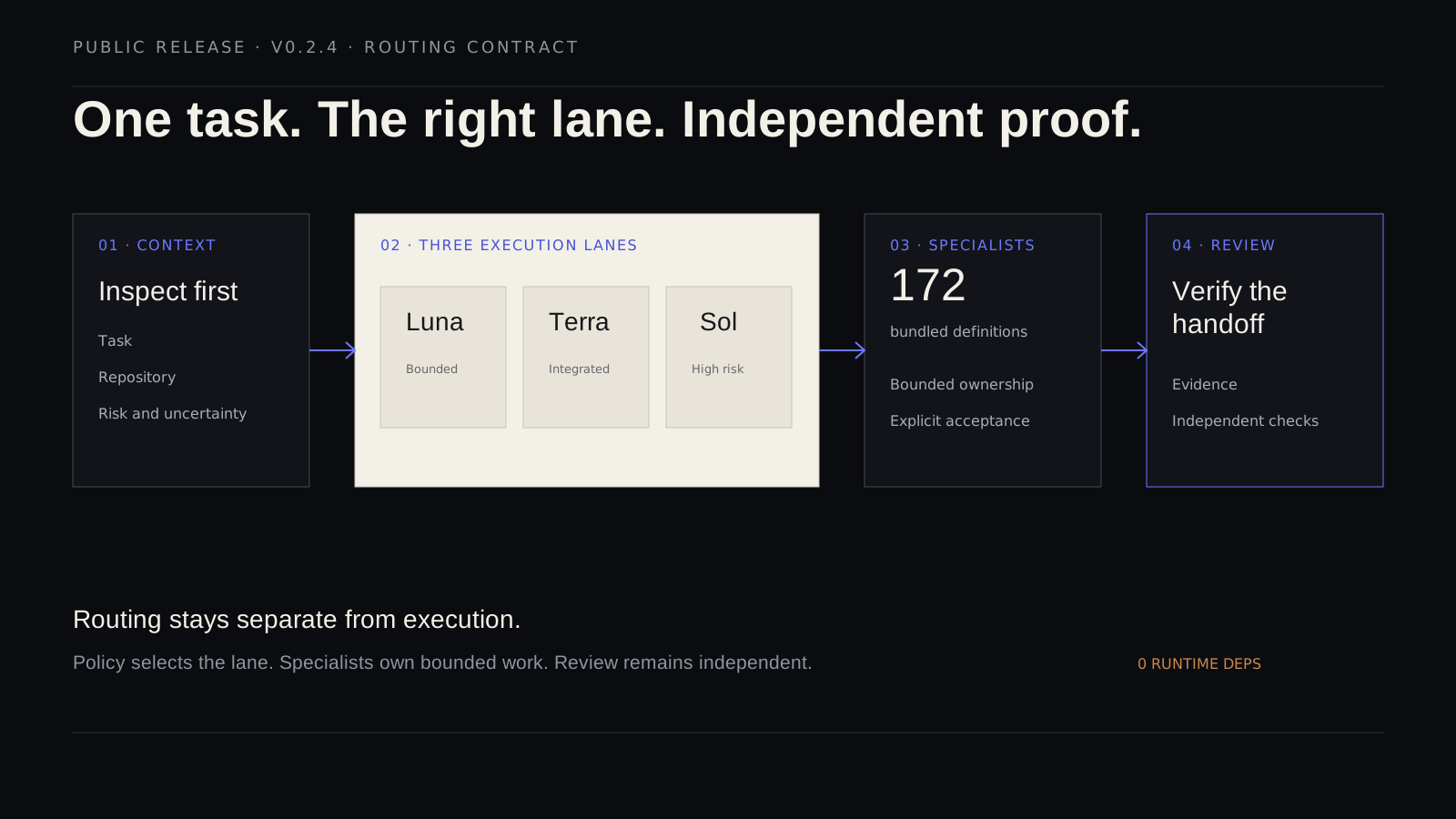
Code-native system map of the public LaneOrchestrator routing contract.Recorded product interface
The workflow problem
What had to change
Developers should not need to reason about an entire model and agent stack before every task, yet blind routing wastes capability and weakens review.
The product response
How the product behaves
LaneOrchestrator analyses task and repository context, classifies complexity and risk, then emits an auditable route with bounded execution and independent review.
User journey
From first signal to inspectable outcome
01Inspect context
02Classify complexity
03Select model lane
04Route specialist work
05Verify the handoff
Architecture
The control path
The model participates inside a product boundary. Typed software, policy and human review retain authority where consequences matter.
01Context
Task, repository and instruction discovery
02Router
Complexity, risk and uncertainty classification
03Lanes
Luna, Terra and Sol execution policies
04Specialists
Bounded domain agents and skills
05Evidence
Route cards, checks and final verification
Product decisions
Choices that shape the system
01
Routing is separate from execution
The implementer does not self-select or self-approve its lane.