Socrates
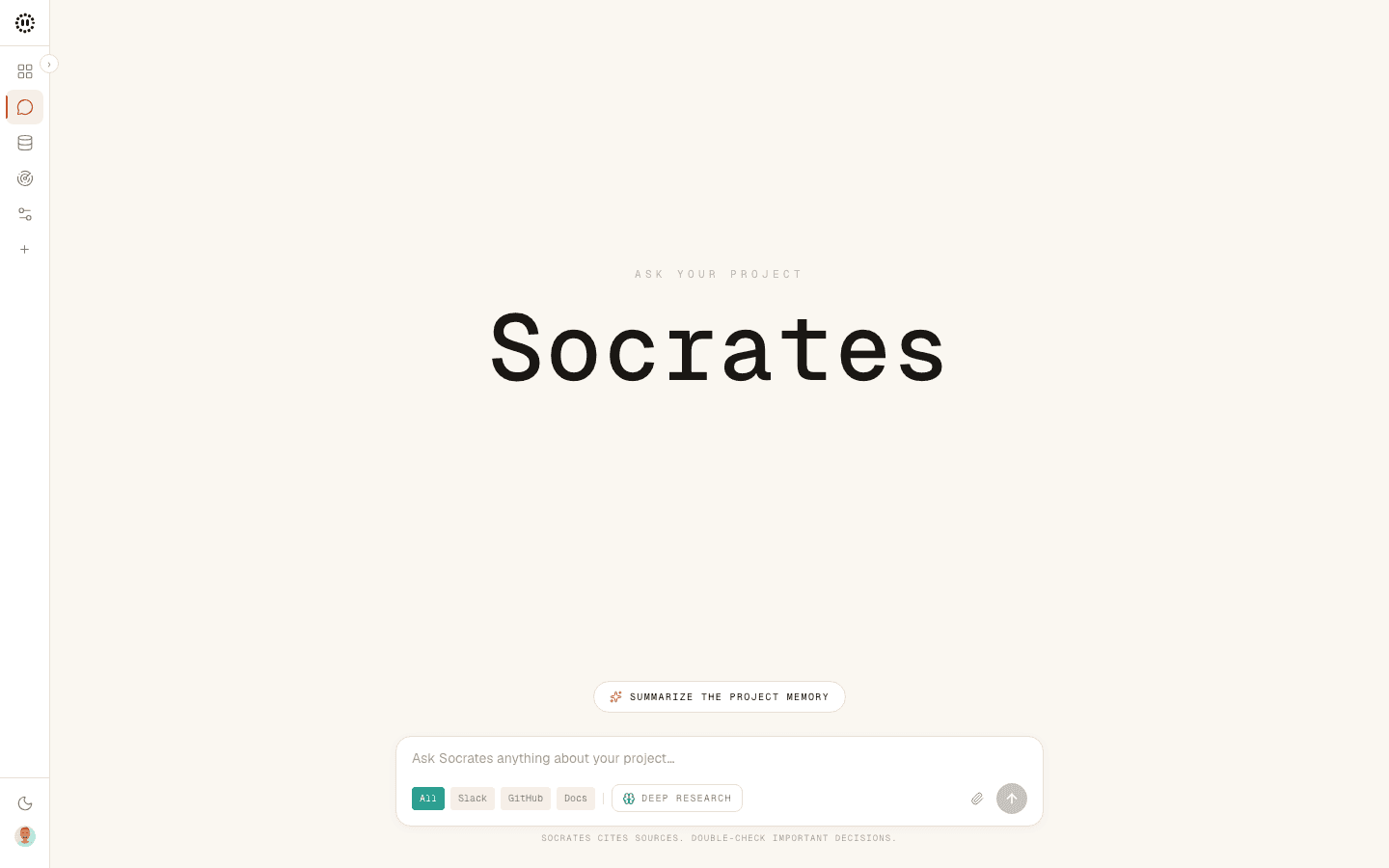
Grounded answers expose citations and make low-evidence states explicit.
Founder case study · discovery, product model, delivery and evaluation
Orchestra separates immutable project evidence from reviewed product truth, turning PRDs, meetings, client conversations and code into citation-backed answers, proposed requirement changes and approved context for teams and AI coding tools.
Across more than 100 customer interviews, the same failure pattern kept appearing. Decisions lived in meetings, client conversations, PRDs, tickets and code. Teams could find individual artefacts, but they could not reliably reconstruct why the product had changed or which statement should guide the next decision.
That changed the product thesis. Orchestra would not be another chat layer over documents. It would preserve evidence, surface conflicts and create an explicit review path before a proposal could become shared product truth.
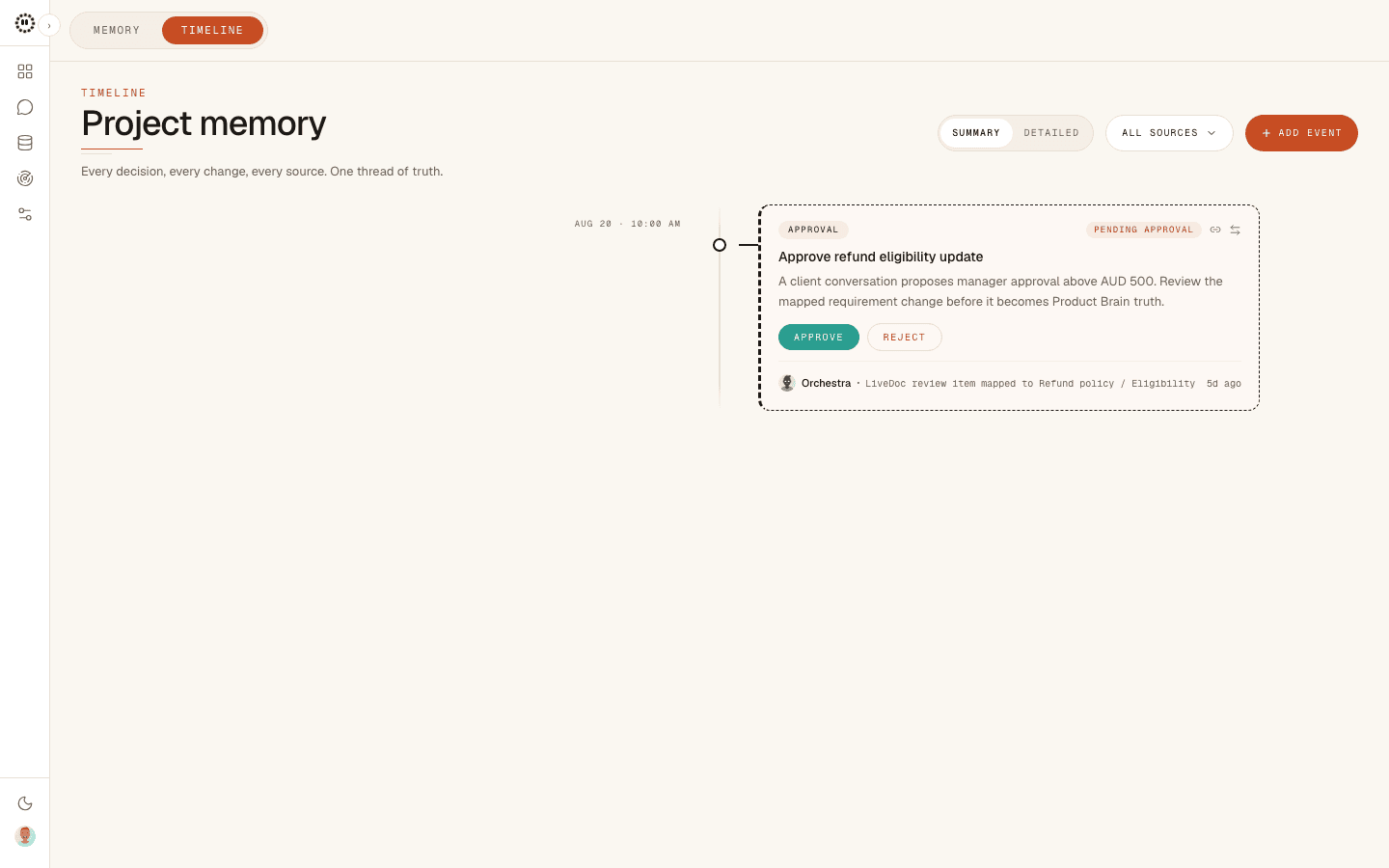
A meeting note, client message or pull request can be authentic evidence and still conflict with the current product direction. Orchestra therefore never silently promotes retrieved text into accepted context.
Retrieval finds relevant evidence. Typed workflow logic and review controls decide what may change. Socrates and MCP deliver only the context appropriate to the requesting user and surface.
PRDs, meetings, conversations, GitHub and Drive
Source records preserved with provenance and permissions
Dense and sparse search with metadata filters and reranking
Questions, conflicts and requirement changes mapped for review
Accepted changes update auditable Product Brain state
Grounded answers and approved context delivered where work happens
Grounded answers expose citations and make low-evidence states explicit.
Proposed requirement changes remain inspectable before accepted context moves.
Approved context reaches tools through read-only boundaries rather than hidden write access.
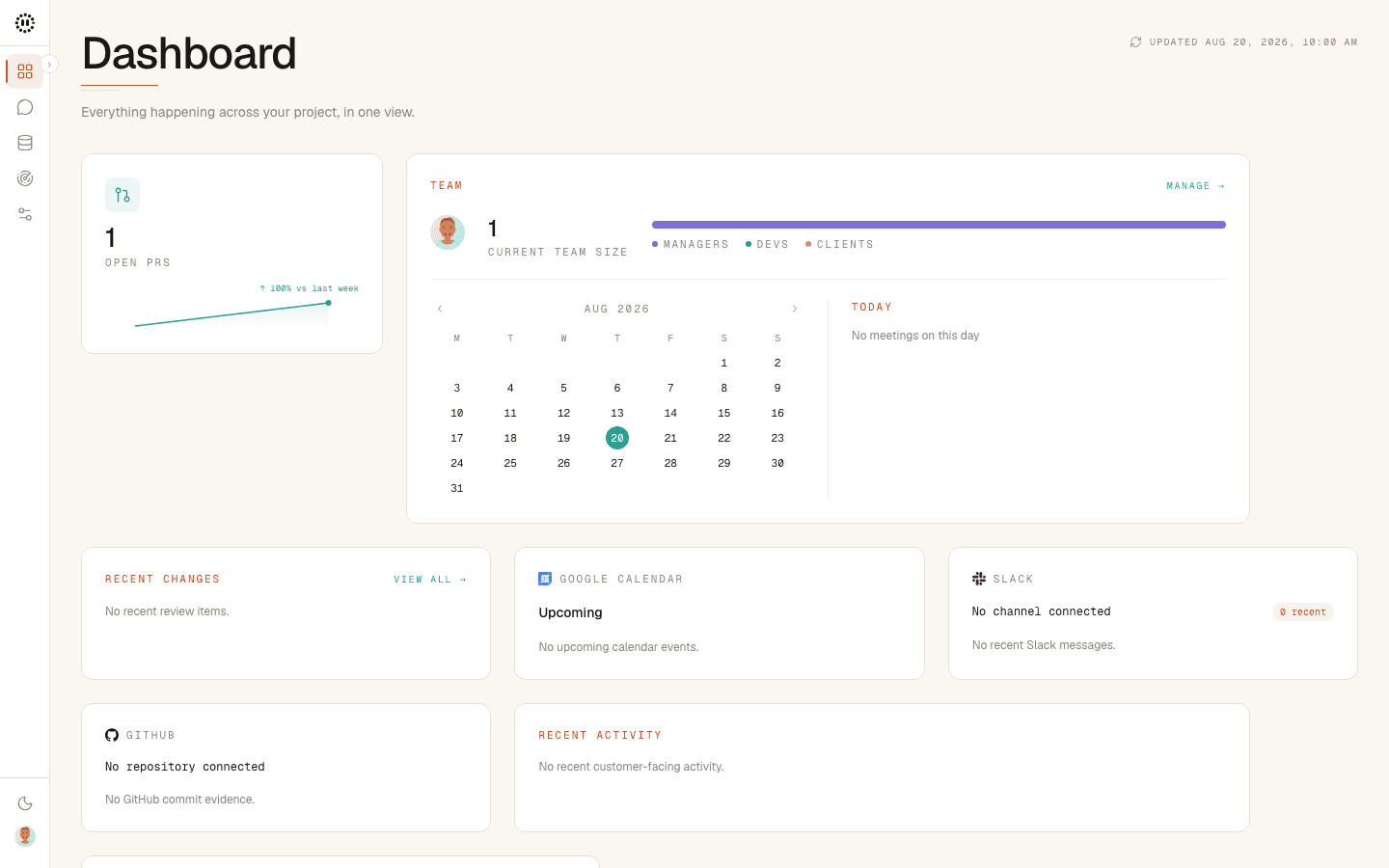
The public portfolio claim remains the résumé-verified 148-case suite. The categories below describe what that evaluation strategy protects.
Teams value a shared path from scattered evidence to grounded answers and reviewable product decisions.
The beta remains private, customer data is excluded from this portfolio and public visuals use deterministic demonstration records.
Customer discovery, Product strategy, System architecture, Retrieval and evaluation design, Engineering delivery, Pilot execution.